Male Escort Melbourne – 3 May, 2026
There’s a reason The Alchemist, by Paulo Coelho doesn’t feel like something you simply read, but something you slowly remember. Its wisdom doesn’t arrive as information; it unfolds as recognition, as though it is gently waking something within you that has always been there. And within it, this story offered by Paulo Coelho carries a depth that reveals itself more fully the longer you sit with it, not as a lesson to be understood intellectually, but as a truth to be embodied.
It is a wonderful book, and I must soon write a book review of it.
But for now, here is one story, from within the story:
“… But before I go, I want to tell you a little story.
“A certain shopkeeper sent his son to learn about the secret of happiness from the wisest man in the world. The lad wandered through the desert for forty days, and finally came upon a beautiful castle, high atop a mountain. It was there that the wise man lived.
“Rather than finding a saintly man, though, our hero, on entering the main room of the castle, saw a hive of activity: tradesmen came and went, people were conversing in the corners, a small orchestra was playing soft music, and there was a table covered with platters of the most delicious food in that part of the world. The wise man conversed with everyone, and the boy had to wait for two hours before it was his turn to be given the man’s attention.
“The wise man listened attentively to the boy’s explanation of why he had come, but told him that he didn’t have time just then to explain the secret of happiness. He suggested that the boy look around the palace and return in two hours.
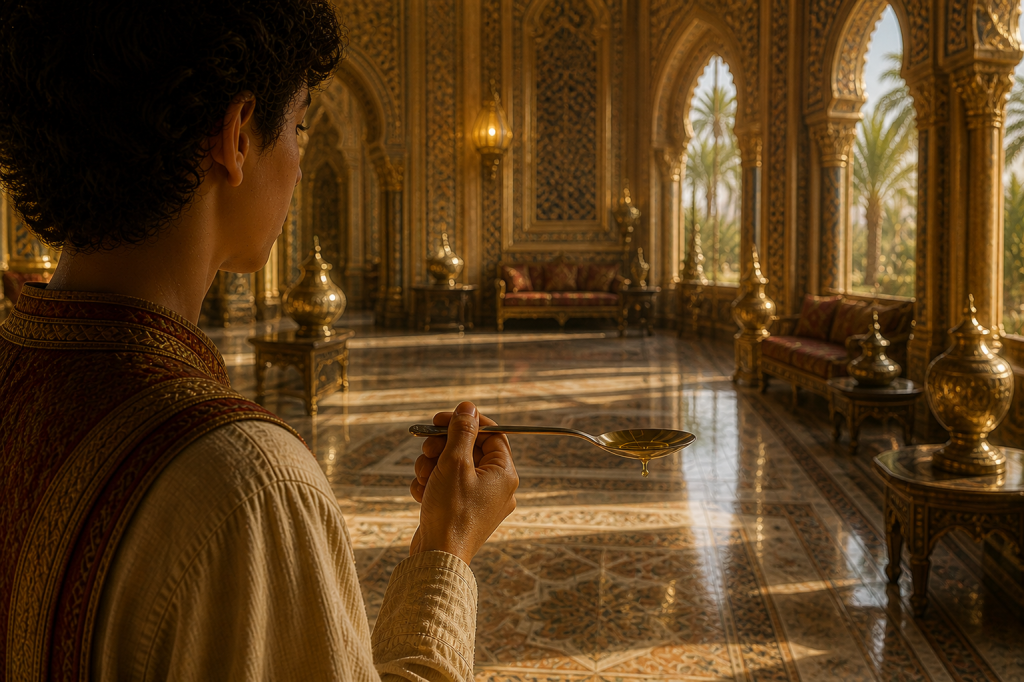
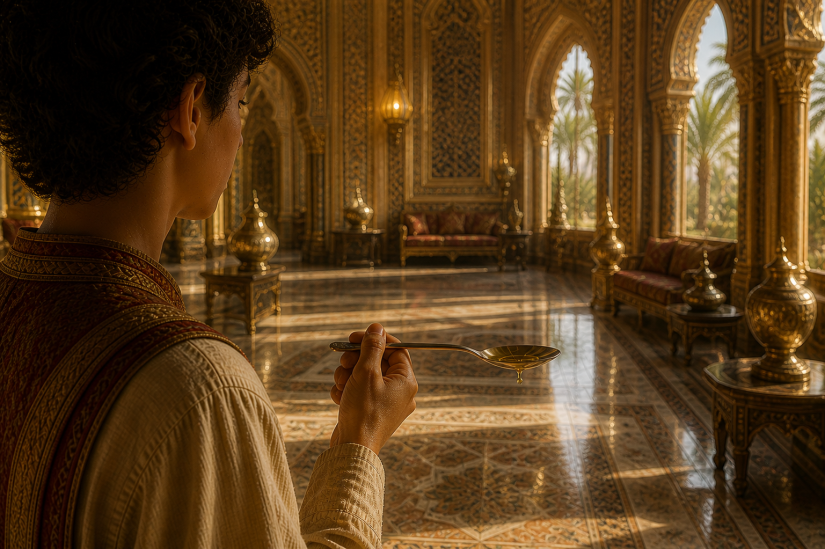
“‘Meanwhile, I want to ask you to do something,’ said the wise man, handing the boy a teaspoon that held two drops of oil. ‘As you wander around, carry this spoon with you without allowing the oil to spill.’
“The boy began climbing and descending the many stairways of the palace, keeping his eyes fixed on the spoon. After two hours, he returned to the room where the wise man was.
“‘Well,’ asked the wise man, ‘did you see the Persian tapestries that are hanging in my dining hall? Did you see the garden that it took the master gardener ten years to create? Did you notice the beautiful parchments in my library?’
“The boy was embarrassed, and confessed that he had observed nothing. His only concern had been not to spill the oil that the wise man had entrusted to him.
“‘Then go back and observe the marvels of my world,’ said the wise man. ‘You cannot trust a man if you don’t know his house.’
“Relieved, the boy picked up the spoon and returned to his exploration of the palace, this time observing all of the works of art on the ceilings and the walls. He saw the gardens, the mountains all around him, the beauty of the flowers, and the taste with which everything had been selected. Upon returning to the wise man, he related in detail everything he had seen.
“‘But where are the drops of oil I entrusted to you?’ asked the wise man.
“Looking down at the spoon he held, the boy saw that the oil was gone.
“‘Well, there is only one piece of advice I can give you,’ said the wisest of wise men. ‘The secret of happiness is to see all the marvels of the world, and never to forget the drops of oil on the spoon…’”
— Paulo Coelho, The Alchemist
When you look beneath the surface of this story, the palace begins to feel less like a place and more like a reflection of existence itself. It is vast, layered, alive with movement and beauty, filled with moments that invite your attention in every direction. It represents the fullness of life — the conversations, the pleasures, the distractions, the art, the chaos, the fleeting and the meaningful all woven together into something impossibly rich. To walk through it is to participate in the human experience in all its colour and complexity.
And yet, in the boy’s hand rests something far quieter, far more subtle. The drops of oil are not merely a task or a burden; they symbolise the essence of inner awareness, the fragile but steady presence of self that you carry within you. They are your consciousness, your values, your sense of grounding, the part of you that observes rather than reacts, that knows rather than chases. They are easy to overlook precisely because they are so simple, and yet they are the very thing that determines whether your experience of life becomes meaningful or lost in noise.
Most people, without realising it, live at one extreme or the other. Some become so focused on protecting what they carry that they move through life with narrowed vision, careful and controlled, but disconnected from the beauty unfolding around them. They do not spill the oil, but they never truly see the palace. Others surrender themselves entirely to the experience, absorbing every sensation, every pleasure, every distraction, until they become immersed in the world to the point of losing their centre. They see everything, but they lose what anchors them.
What this story reveals, in a way that is both simple and profoundly spiritual, is that the secret is not found in choosing between these two ways of being, but in transcending the need to choose at all. It is about cultivating a state of awareness where you can move through the richness of life fully engaged, fully present, and yet remain deeply rooted within yourself. This is not balance in the ordinary sense, where you are constantly adjusting and correcting, but a deeper integration where both aspects coexist naturally, without tension.
There is something almost sacred in this way of living, because it asks for a level of consciousness that goes beyond habit or instinct. It asks you to be awake within your own life, to witness it as it unfolds while still honouring the quiet essence of who you are. In this state, experience does not pull you away from yourself, and responsibility does not separate you from the world. Instead, both become expressions of the same awareness, moving together in harmony.
And perhaps this is where the deeper meaning of happiness begins to emerge, not as a fleeting emotion or a moment of pleasure, but as a grounded, expansive state of being. It is the feeling of walking through your own life with open eyes and an anchored heart, where nothing needs to be clung to and nothing needs to be avoided. There is simply a quiet, steady presence that allows you to experience everything without losing yourself in it.
In the end, what Paulo Coelho offers here is not an instruction, but an invitation. An invitation to move through the world with a deeper awareness, to see its beauty without becoming consumed by it, and to remain connected to yourself without withdrawing from life. It is an invitation to realise that you were never meant to choose between the outer world and your inner truth, but to live in such a way that both are honoured simultaneously, and in that union, something profoundly whole begins to take shape.